Case study · Anitinke · Visual identity system
One character. Locked once. Rendered anywhere.
Anitinke is my character. By now he's been in hundreds of AI-generated images: playing whac-a-mole with his paperwork, tending an asado at dusk, mining a glowing vein underground. And he's always unmistakably himself.
Every frame came out of the same small workflow: lock the character once, then every image is references plus one instruction. This page shows the whole system, with the receipts.
The character that was never going to exist
Anitinke illustrates a free daily writing practice. There is no world where that newsletter has an illustration budget: the honest alternative to these images was no images. And that's true for most projects that could use a face. The passion project, the community, the pickleball team mascot. They were never going to be anyone's client.
A note before we go on, because I come from animation and this matters to me: I know exactly what a character designer brings to a project, and this page is not an argument against hiring one. If your project has that budget, hire the artist. That craft is the ceiling, and nothing here reaches it. This system is for everything that budget was never going to touch.
And here's the part I didn't expect: I'm not an illustrator. My background is animation, moving characters that other artists designed. This toolset let me do character design for the first time in my life, the clothing, the hair, dozens of backgrounds to test ideas, and I've been having a blast. I'm honestly proud of how he turned out. That's the door this opens: not replacing the craft, letting more people fall in love with it.
"Art challenges technology, and technology inspires the art."
John Lasseter. The circle of life, basically.
For those projects, the only trap left is technical: ask AI naively and you get a slightly different character every generation. The face shifts, the outfit mutates, and the "recognizable" part quietly dies.
That's the trap: your character never exists, or it exists as a stranger every time.
The way out isn't a magic model. It's a small workflow, and you only build it once. And if your project grows into real budget someday, this doesn't compete with hiring an artist: it's the proof your character deserves one.
The system
Five moves. The images on this page are the real production assets, pulled from the catalog with their prompts and references on record.
Design onceyou
I generated candidates in cheap 2x2 grids across several models until the design I loved appeared, then regenerated the winner alone at full resolution. Anitinke took me 51 generations across 8 models to lock. That exploration is the only expensive part, and you pay it once.
Lock the canonyou
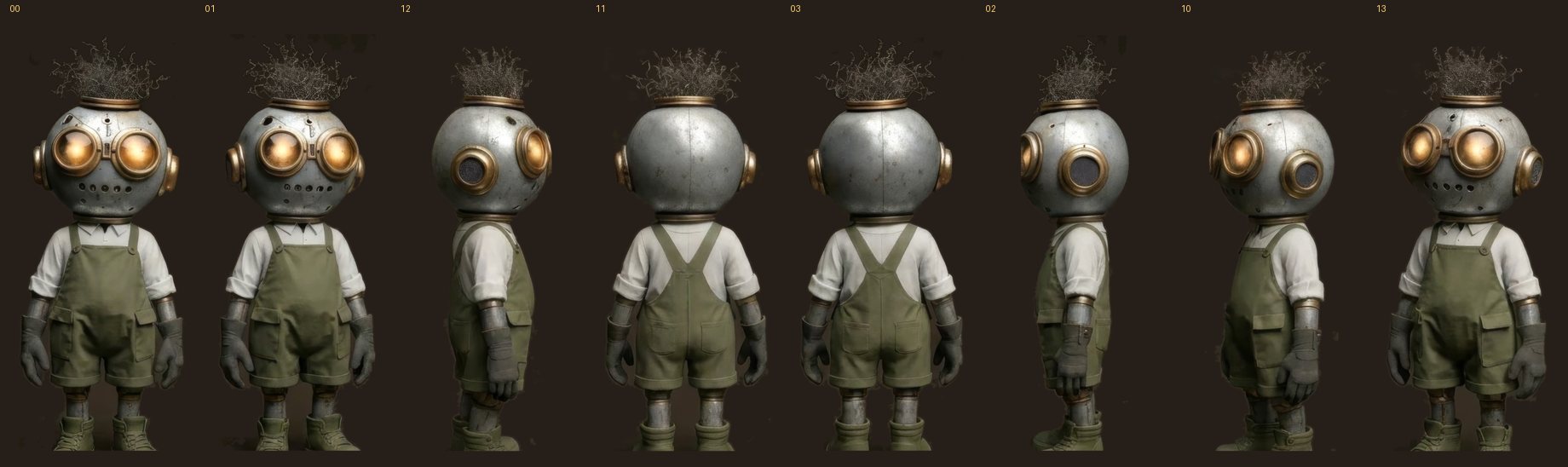
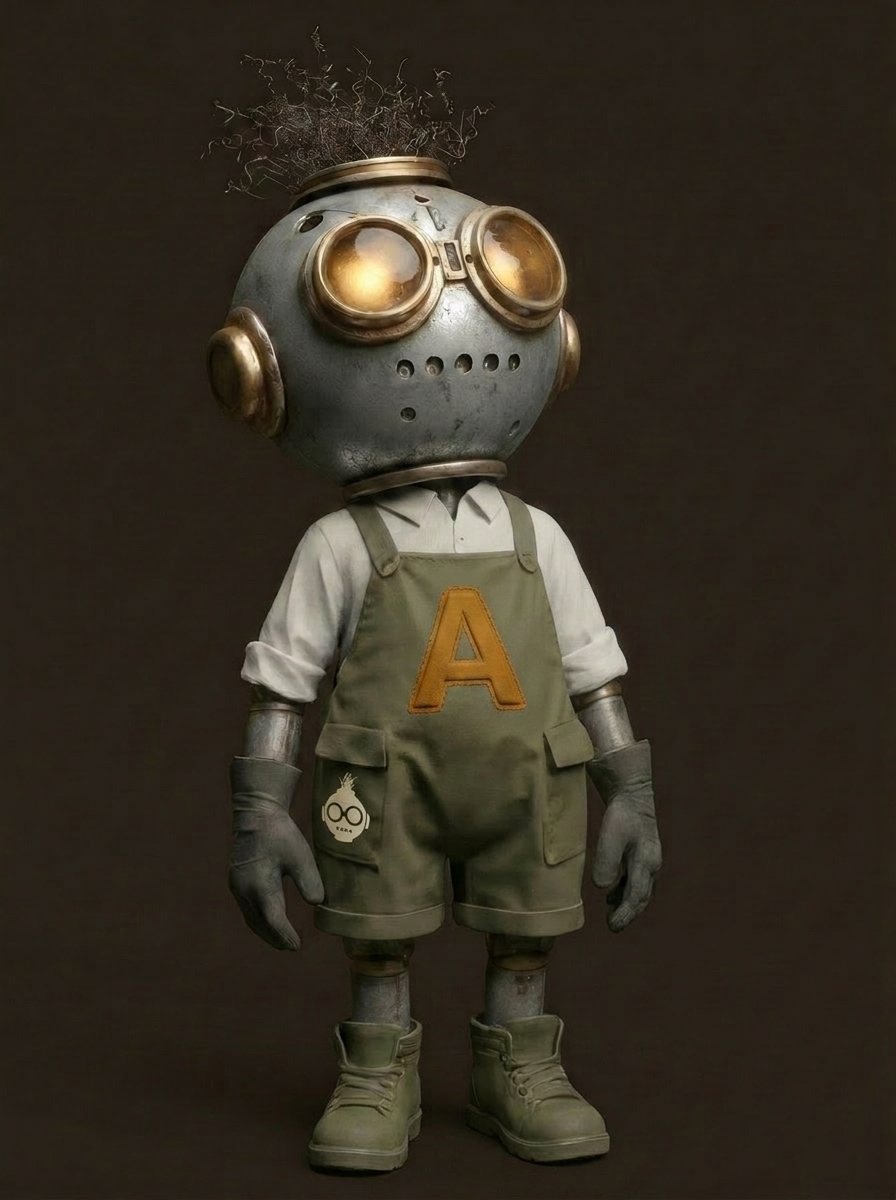
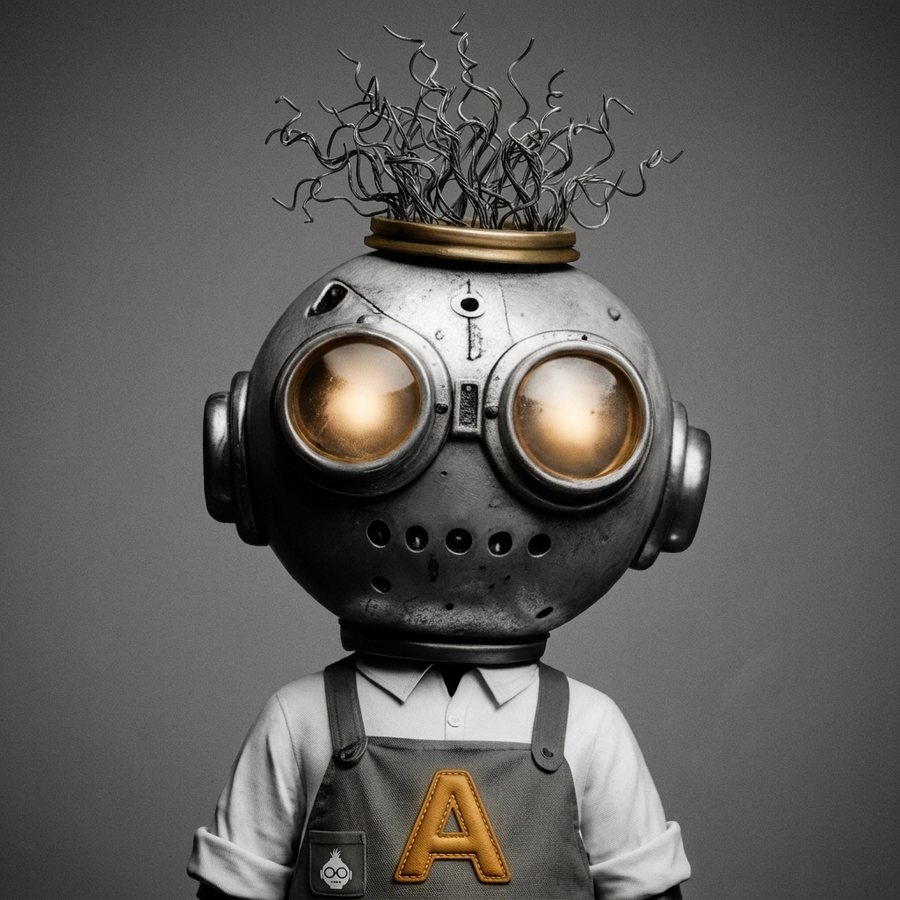
I keep two or three canonical reference images: a turntable that shows him from every angle, plus close-ups of whatever models get wrong. For Anitinke that's the wire hair and the clothing logos.
References plus one instructionauto
You never ask the model to remember your character. It can't. Instead, every new image is the canon references plus one short instruction. The model copies identity from the references and changes only what you asked. This is a real prompt from my catalog, with the sheet it produced. The drawings it mentions are mine, by the way: I sketched the poses, the model put him in them.
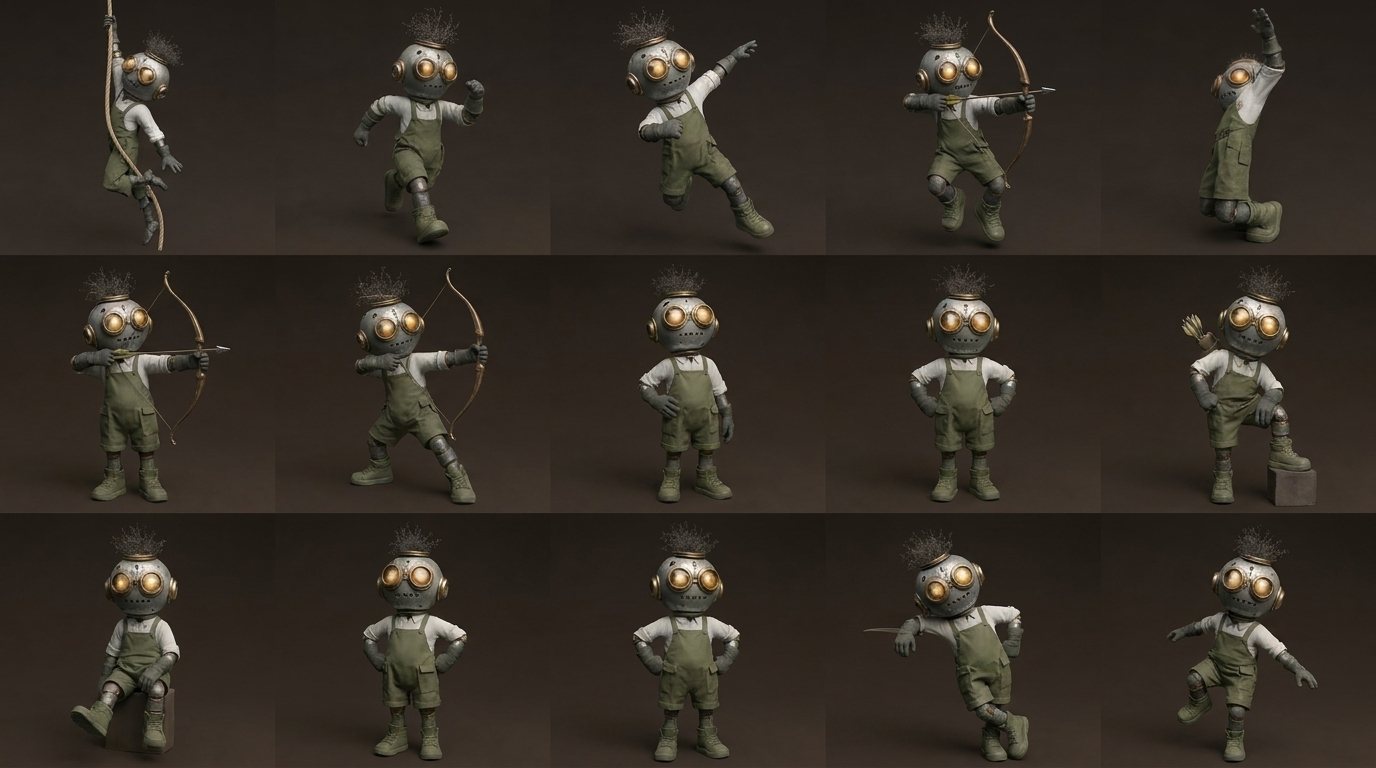
Day-to-day edits are even shorter. Real instructions in my catalog read like "Swap the character boots" and "Remove the ear cables." One line each.
One change per generationyou
Ask for two changes at once and the character starts drifting. I chain small edits instead: each winner becomes the next reference. And when a batch does drift off-model (one of my profile-picture runs once came out without the clothing logos), the fix is pinning the canon references harder, not starting over.
Create conversationallyauto
The prompts that reach the image model are structured in labeled sections (CHARACTER, OUTFIT, POSE, STYLE, LIGHT), because that format edits cleanly. I never type those by hand. I say what I want in plain language and my agent converts it into the structured prompt before it reaches the model. And for my daily essays I don't even ask: while I edit the text, the agent reads the piece and generates matching scenes on its own. My favorite image of Anitinke playing whac-a-mole with his pending tasks? The agent's idea, not mine. It read an essay about being overwhelmed and surprised me with it.
Which model? Start wide, then go direct
I shop models on an aggregator first: one subscription with all the big image and video models in one place, so I can run the same prompt across five of them side by side. That's how Nano Banana (Google's image model) won the job for me: in a blind triage of one exploration session I kept 39% of what it made, and no other model broke 15%.
Once a model wins, go straight to the source: an API key from the provider, paying per image in dollars instead of platform credits. Cheaper, and the cost per image stops being fuzzy. The aggregator stays in my loop for what it's best at: comparing models, and video.
The proof
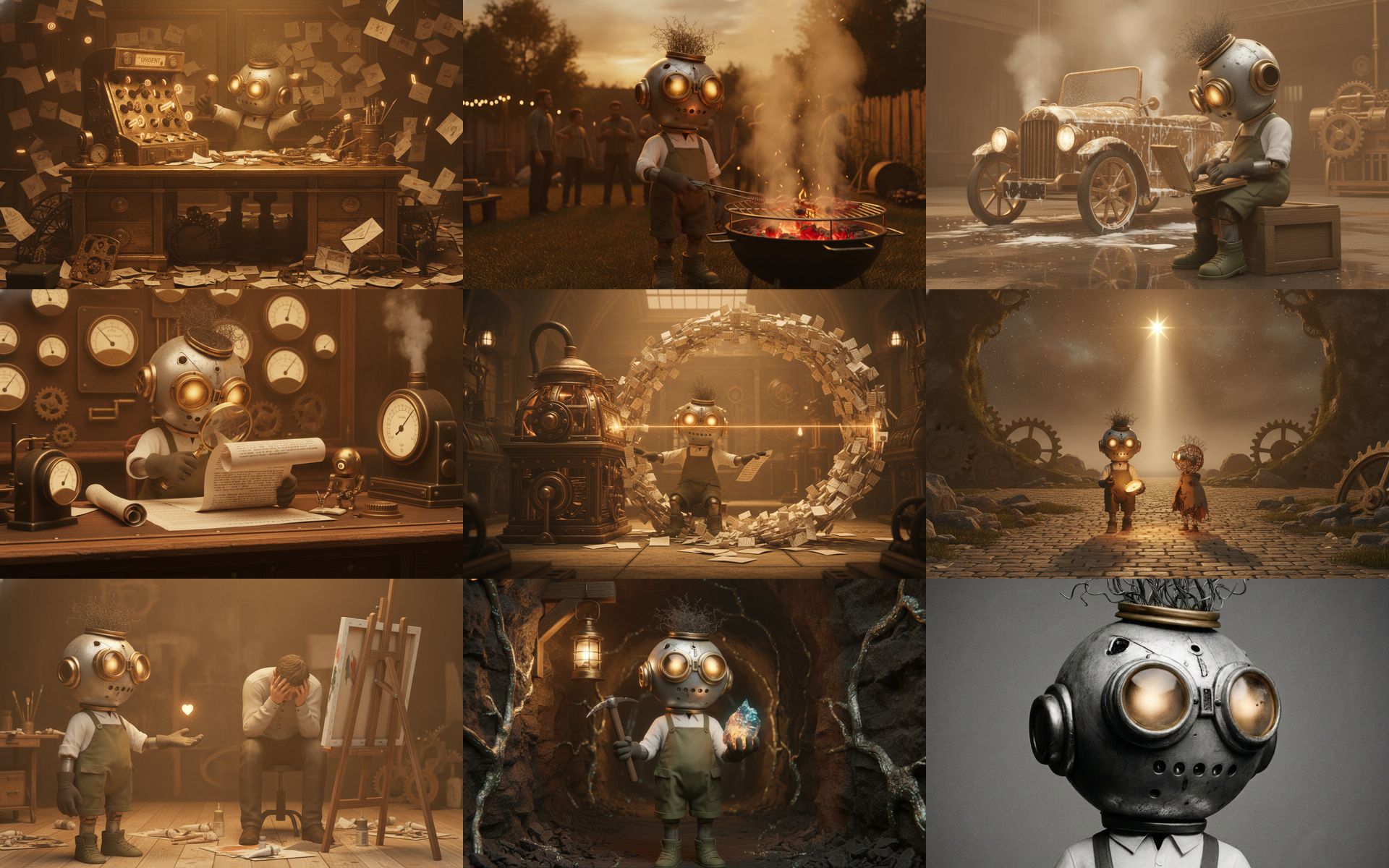
Let me be honest with you: "recognizably the same" is the claim, not "pixel-identical". The wire hair changes frame to frame, and that's fine. People recognize a character the way they recognize a person: silhouette, face, outfit, attitude. The canon locks exactly those.
On screen: Anitinke, my character. Every image comes straight from the live production catalog.
What this means for you
If your newsletter, community or product could use a face people recognize instantly, and hiring an illustrator was never on the table, you don't have to settle for identity drift. You need one good design session, three reference images, and the discipline of one change per generation.
I build visual-identity systems like this one, wired into your content pipeline so the images generate themselves while you edit your words.
Book a call20 minutes. You tell me where your content needs a face, I tell you what a character system for your brand would look like. No hype.
Build notes
Honestly, this page exists because people keep asking. Every time Anitinke shows up somewhere, on a call, in a post, in a DM, someone wants to know how the images are made. I love those conversations, but at some point the answer deserved better than me retyping it one chat at a time. So here it is, written down properly, visuals included. Thanks for asking, you know who you are.